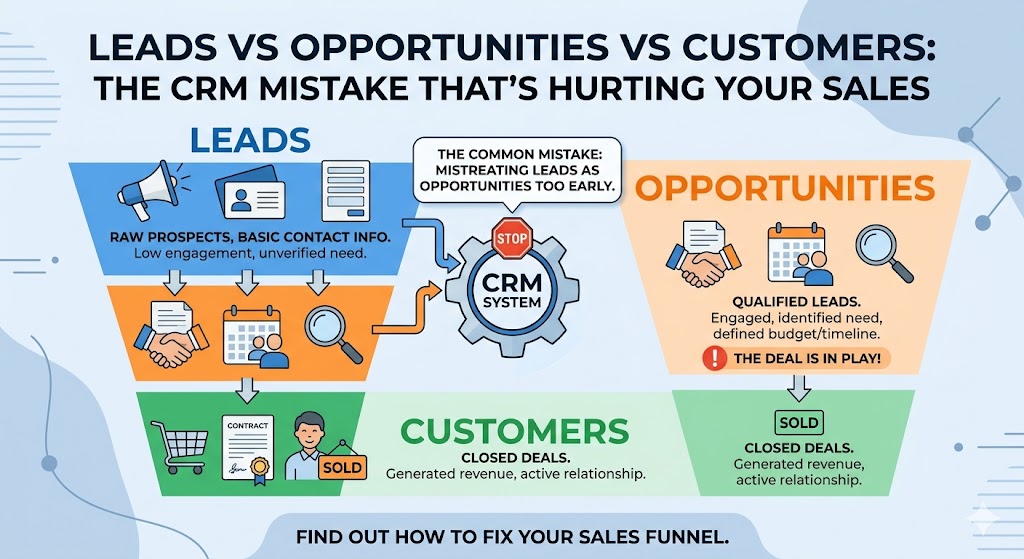
Leads vs Opportunities vs Customers: The CRM Mistake That’s Hurting Your Sales
One of the most common reasons a CRM stops being useful is surprisingly simple.
The business cannot clearly explain the difference between a lead, an opportunity, and a customer.
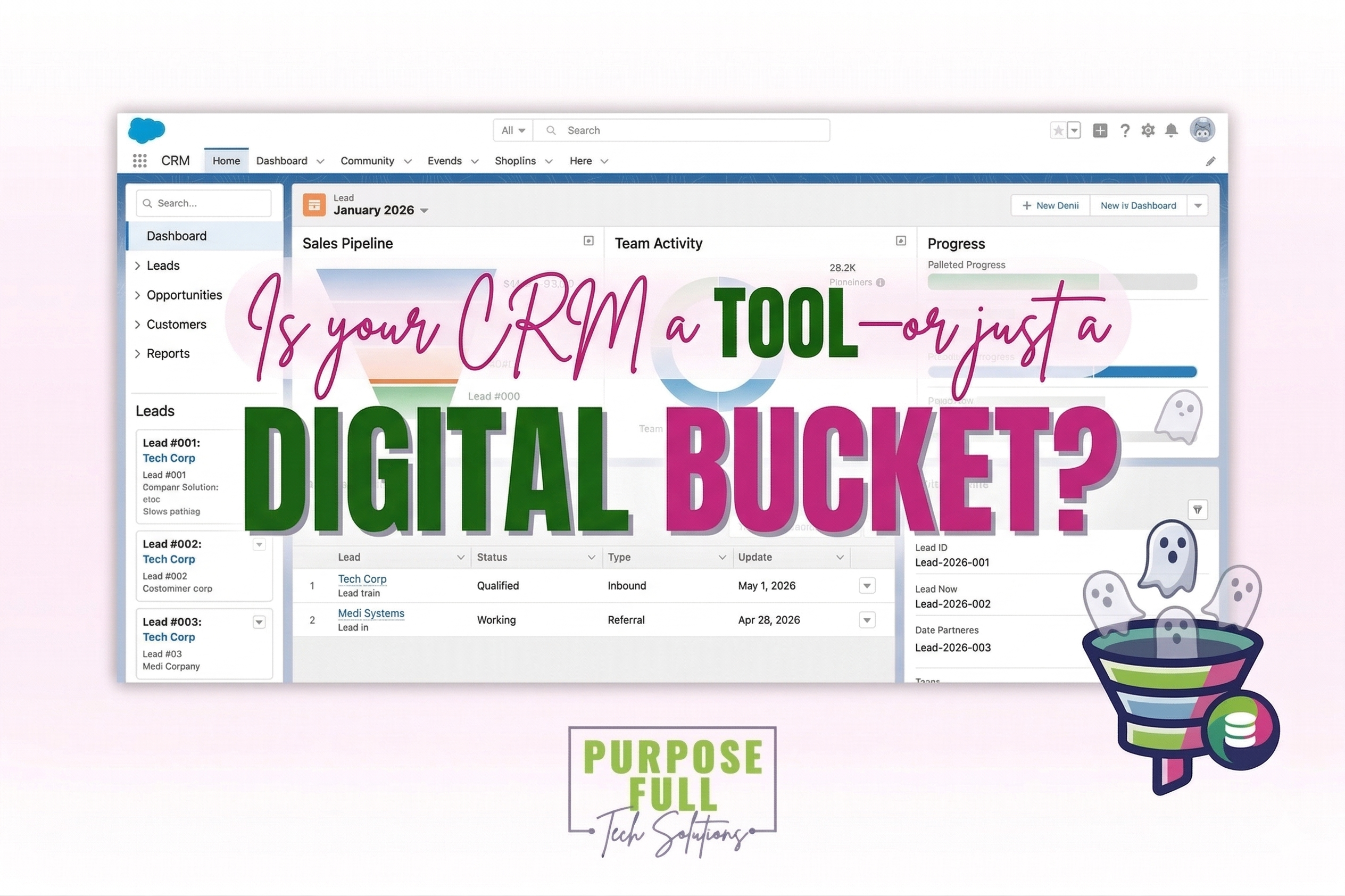
At first glance, this might seem like a minor issue. After all, they are all just people or companies you are trying to do business with. But in practice, this confusion creates a ripple effect that impacts reporting, follow-up, forecasting, and accountability.
When everything is treated the same, nothing is managed well.
Clarity at this level is not a technical detail. It is the foundation of how your sales process works.
Why Lifecycle Confusion Quietly Break Your CRM
When stages are not clearly defined, the CRM starts to drift away from reality.
You might see a long list of “active” records, but no one can confidently say who is actually being pursued right now. Reports might show a healthy pipeline, but deals stall because no one knows what stage they are truly in.
This is how businesses end up asking questions like:
Are these real opportunities or just early conversations
Who actually needs follow-up this week
Why does our pipeline look full but nothing is closing
The system is not broken. The definitions are.
When the lifecycle is unclear, the CRM becomes a place where information is stored, not a system that drives action.
What A Lead Actually Represents
A lead is not a deal. It is not even a confirmed opportunity.
A lead is simply someone who might become a customer.
They may have expressed interest. They may fit your target profile. They may have come from a list, a referral, or a form. What they have not done yet is commit to engaging in a real sales conversation.
This distinction matters because leads require qualification, not pursuit.
At this stage, the goal is to determine whether this person is worth investing time in. That might involve an initial conversation, basic research, or a simple outreach.
If every lead is treated like an opportunity, teams become overwhelmed very quickly. Time gets spread thin. Follow-up becomes inconsistent. The system fills up with noise.
Lead should represent potential, not progress.
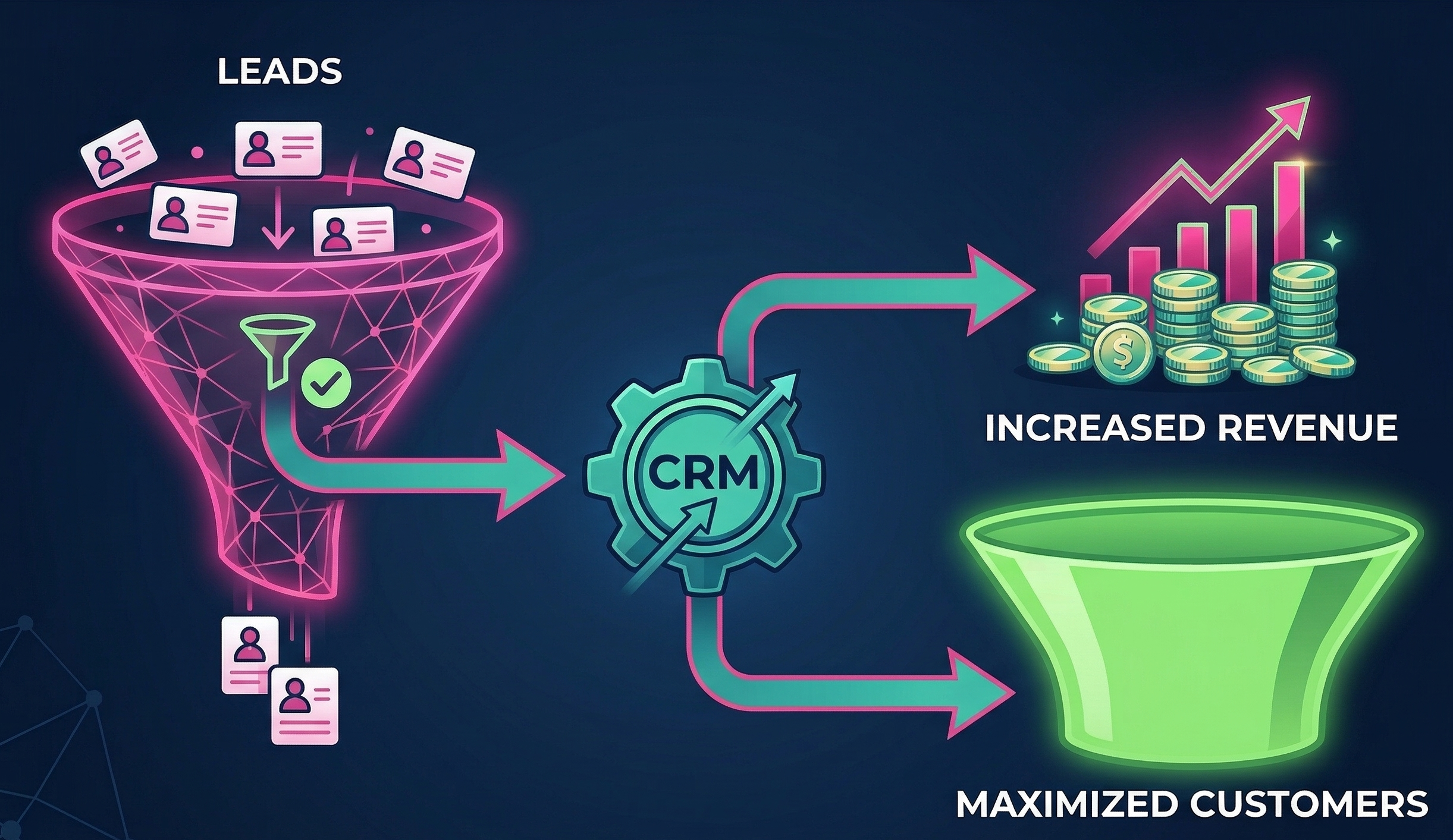
When Interest Becomes An Opportunity
The shift from lead to opportunity is one of the most important transitions in your CRM.
This is the moment when a contact moves from possibility to active engagement.
An opportunity exists when there is a real conversation happening about doing business together. There is intent, not just awareness. There is a path forward, even if it is not fully defined yet.
This is where structured follow-up becomes critical.
Opportunities require attention. They require clear next steps. They require movement through a defined process. Without that structure, they stagnate.
Many businesses blur this line and end up with a pipeline full of contacts that are not truly opportunities. This creates false confidence and makes forecasting unreliable.
When everything looks like an opportunity, nothing stands out.
Customers are a different operational reality
Once someone becomes a customer, the nature of the relationship changes completely.
You are no longer trying to win their business. You are responsible for delivering on it.
This is where many CRMs lose clarity. Customers are often left sitting in the same structures as leads and opportunities, which creates confusion about priorities and responsibilities.
Sales activity and delivery activity are not the same.
A customer needs onboarding, communication, and ongoing support. Their journey is no longer about persuasion. It is about execution.
When customers are not clearly separated in your system, teams struggle to understand where to focus. Sales tasks mix with delivery tasks. Follow-up gets inconsistent. Important details get buried.
A CRM should reflect this shift clearly. Otherwise, it becomes difficult to manage either side effectively.
What Changes When These Distinctions Are Clear
When leads, opportunities, and customers are clearly defined, the entire system starts to function differently.
Your pipeline becomes easier to trust because it reflects real activity. Your team knows exactly who needs attention and why. Follow-up becomes more consistent because each stage has a purpose.
Conversations also become more productive.
Instead of debating where something belongs, teams can focus on what needs to happen next. Instead of questioning the data, they can act on it.
Clarity reduces friction.
It also improves accountability. When stages are well defined, it becomes obvious when something is stuck and who is responsible for moving it forward.
The role of discipline in maintaining clarity
Even with clear definitions, the system only works if people use it consistently.
That means making decisions about when something moves from one stage to another and sticking to those decisions. It means resisting the temptation to leave things where they are because it feels easier.
Every stage should have a reason. Every transition should be intentional. Without discipline, even the best-designed lifecycle will slowly lose meaning. With discipline, even a simple structure becomes powerful.
A better way to think about your pipeline
Your CRM is not just a list of contacts. It is a reflection of how your business moves from first interaction to long-term relationship.
Leads represent possibility. Opportunities represent active pursuit. Customers represent commitment.
Each stage has a different purpose. Each requires a different mindset. Each demands a different type of action.
When those differences are respected, your CRM becomes more than a database. It becomes a system that supports decisions, clarifies priorities, and helps your team move forward with confidence.
Conclusion: Clarity is Your Competitive Advantage
A CRM is only as powerful as the definitions you feed it. When you stop treating your database as a giant digital bucket and start treating it as a structured lifecycle, your team stops guessing and starts executing. By respecting the boundaries between Leads, Opportunities, and Customers, you don’t just fix your reporting—you fix your culture of accountability.
Is your CRM helping or hurting? Don't let a cluttered system stall your growth. If your pipeline feels like a "black box," let’s shine a light on it. Book a CRM Strategy Call today to define your stages and build a process that actually drives revenue.